
Caravan Awnings: Choosing the Right Type for Your Needs
A caravan awning is a versatile and valuable addition to any caravan setup, creating extra living space and providing shelter from the elements. However, with different types available, it can be challenging to decide which one best suits your needs. Caravan awnings generally fall into two categories: pole awnings and air awnings, with each type available as either full awnings or porch awnings. Here’s a guide to help you understand the differences, advantages, and disadvantages of each type so you can make an informed decision.
Types of Caravan Awnings
1. Pole Awnings vs. Air Awnings
Both pole and air awnings come with their own unique benefits and drawbacks, and choosing between them depends on your preferences, setup routine, and the weather conditions where you typically caravan.
- Pole Awnings
- Pros:
- Pole awnings use metal or fiberglass poles for structural support, which can be securely anchored with storm straps. This makes them particularly resilient in windy weather.
- They can be lighter to handle than some air awnings, and you don’t need to worry about air pressure changes or leaks.
- Cons:
- Setting up a pole awning can be challenging, especially if you’re caravanning solo or if you’re new to using poles.
- In severe storms, the poles can be hazardous if the awning isn’t taken down. Strong winds can lift the awning, causing the poles to hit the caravan or surroundings.
- Pros:
- Air Awnings
- Pros:
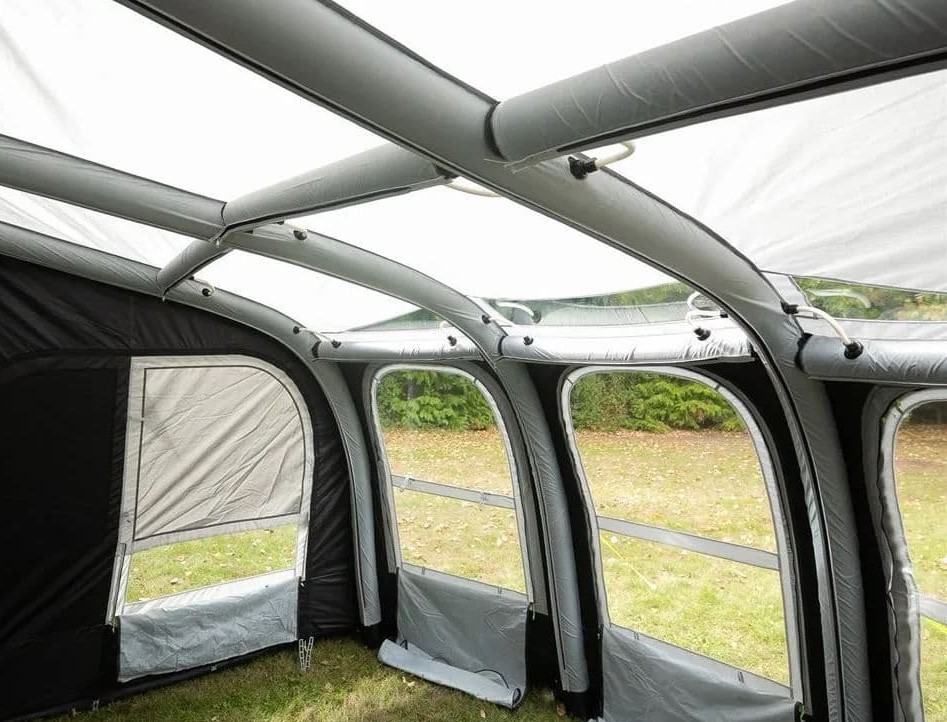
- Air awnings are generally easier and quicker to set up. They’re inflated using a manual or electric pump, which can be faster and require less physical effort than handling poles.
- They don’t have hard poles, so if the wind causes them to shift, there’s less risk of physical damage to the caravan itself.
- Cons:
- Air awnings can be more challenging to secure with storm straps because they rely on inflatable air tubes, which can compress when tightened.
- Air tubes are susceptible to leaks or punctures, and in very hot weather, the air inside can expand, potentially leading to tube “blowouts.” To avoid this, it’s essential to monitor the air pressure and adjust it if the temperature changes significantly.
- Pros:
2. Full Awnings vs. Porch Awnings
Choosing between a full caravan awning and a porch awning largely depends on how much space you need and how often you plan to use it.
- Full Awnings
- Pros:
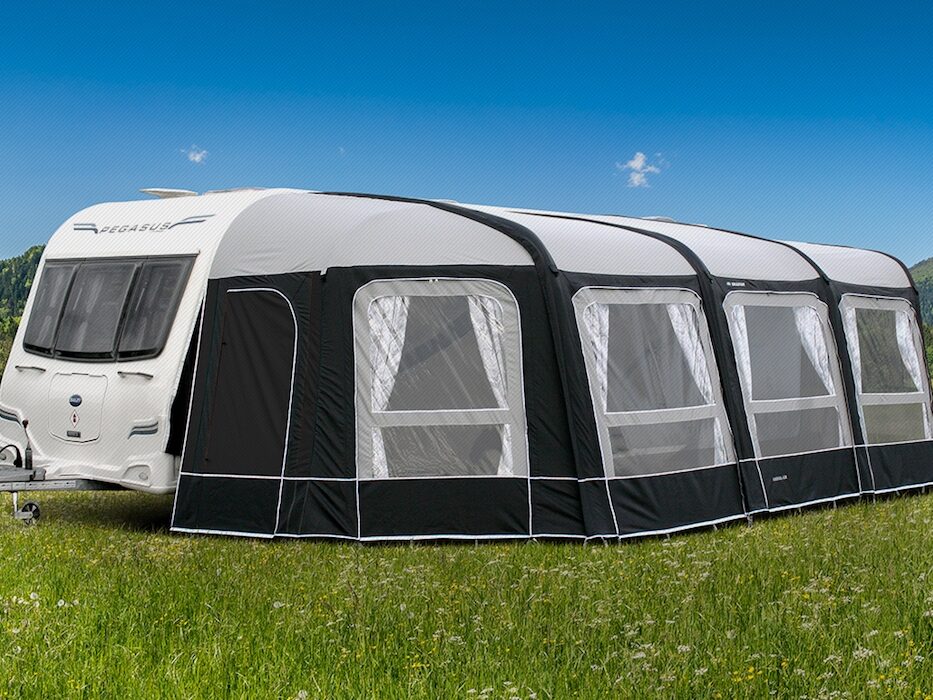
- Full awnings cover the entire length of the caravan and attach firmly to the awning rail. They’re custom-fit for your caravan’s dimensions, creating a secure extension of your living space.
- Ideal for long-term use, they can offer more storage space, room for furniture, or even an additional sleeping area.
- Cons:
- Because they’re custom-fitted, full awnings require careful measurements and can be more expensive than porch awnings.
- Setting up and taking down a full awning takes longer, making it less ideal for quick stops or shorter trips.
- Pros:
- Porch Awnings
- Pros:
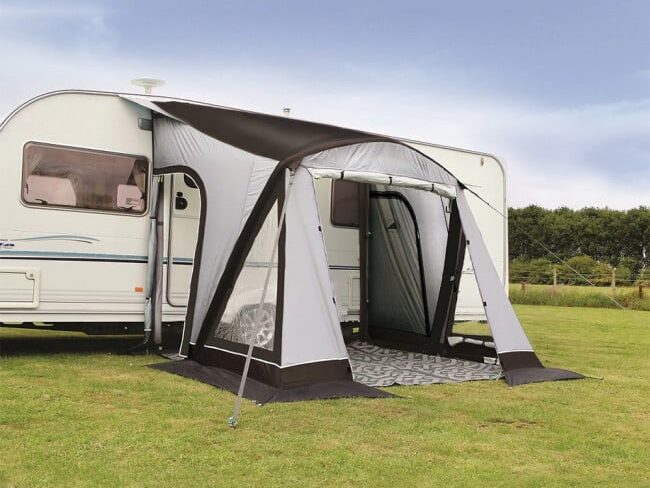
- Porch awnings are smaller and attach to a portion of the caravan’s awning rail, making them more versatile and generally quicker to set up.
- They’re designed to be more universal, so you don’t need custom measurements. They can be positioned to avoid blocking doors or windows, adding convenience.
- Cons:
- Since they only cover part of the caravan, porch awnings provide less space than full awnings, which may not be ideal for longer stays or larger groups.
- Pros:
Factors to Consider When Choosing a Caravan Awning
- Weather Conditions: If you often caravan in windy areas, a pole awning with strong storm straps may be more secure. However, if you’re in milder conditions, an air awning might save you setup time.
- Setup Time: Consider how long you want to spend setting up. Pole awnings require more effort, while air awnings tend to be faster but need attention to air pressure.
- Storage and Portability: Some awnings, especially full pole awnings, can be bulky and take up more storage space. Porch awnings and some air models tend to be lighter and more compact when packed.
- Budget: Full, custom-fitted awnings are typically more expensive than porch options. Air awnings may also come with a higher price due to the technology, but they’re easier to manage solo.
Personal Choice and Practical Experience
Ultimately, the best awning for you comes down to personal preference and practical experience. Many caravaners have a preferred type based on what they’ve found reliable over time. For instance, some prefer pole awnings for their resilience and don’t mind the extra setup time, while others like the simplicity of an air awning despite the occasional pressure adjustments required.
Tips for Maintaining Your Awning
- Regularly Check for Leaks: Air awnings should be monitored for leaks, especially after long periods of use or in extreme weather.
- Adjust in Hot Weather: Lower the pressure on air awnings in very hot conditions to prevent over-expansion.
- Secure Pole Awnings in Windy Conditions: Always use storm straps to secure pole awnings, especially if you’re expecting strong winds. However, it’s best not to leave any awning up during a forecasted storm.
- Clean and Dry Before Storing: Awnings should be thoroughly dried to prevent mold and mildew before packing them away, which will help them last longer.
Conclusion
Choosing between pole and air awnings, and between full or porch designs, ultimately depends on how you plan to use your caravan and your tolerance for setup effort and maintenance. Each has its pros and cons, and personal preference plays a big part. With a bit of research and possibly some trial and error, you’ll find the awning that best suits your style of caravanning. Happy camping!